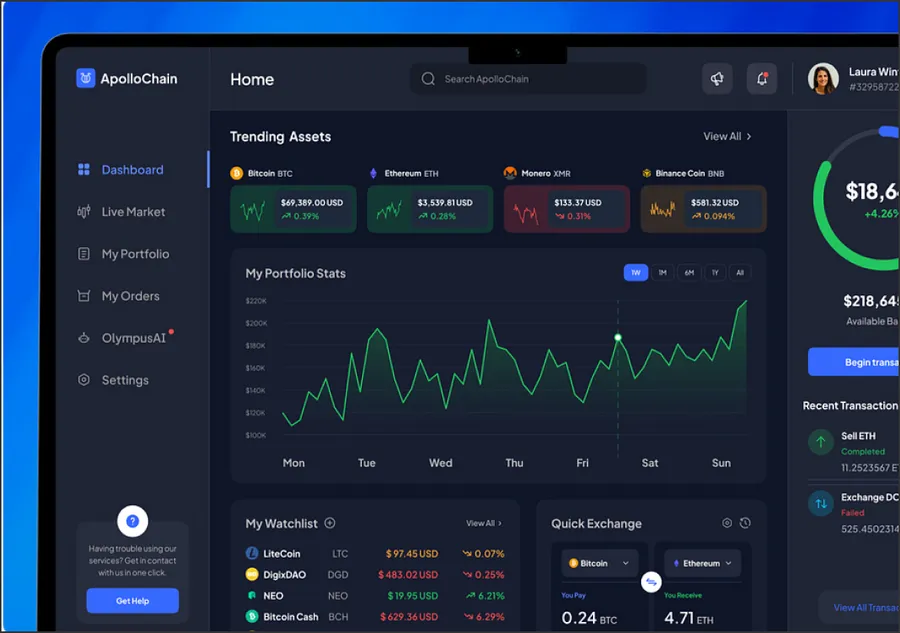
A dedicated React team makes sense when your product is mostly frontend and the roadmap will keep it busy for months: a customer dashboard, a SaaS application, a rebuild of a single page app that has outgrown its first structure. The team works only on your product, has its own lead and answers for delivery to your product owner. If you need one or two React engineers inside a squad that already has a lead, staff augmentation costs less. How the team model works in general is described on the dedicated team overview.
What does a dedicated React team look like?
The shape follows the product, but a frontend heavy team usually has these seats:
| Seat | What they own |
|---|---|
| Team lead (senior React engineer) | Architecture, code review, sprint planning with your product owner, written progress reports |
| React engineers | Features, state and data fetching, tests, performance of the routes they ship |
| Designer, part time or full time | Flows, components and the design tokens that engineers build from |
| QA engineer | Test plans, end to end suites, release checks |
A backend engineer joins when the API is ours to build. If your API already exists, the team works against it and files change requests with your backend owners. For hiring individual React engineers, see React developers.
Next.js or a single page app?
The answer changes hosting, SEO and team skills, so we settle it with you in the first week.
- Next.js fits products where pages must be indexed, load fast on first visit or mix static and personalised content. Server rendering moves work off the device, and routing, data loading and caching come in one framework. Our Next.js work covers both the app router and static output.
- A single page app fits tools behind a login, such as admin panels and internal analytics, where search visibility does not matter and the data changes by the second.
Some products mix both: Next.js for the marketing and account area, an embedded app for the heavy screens.
What does the team own besides features?
A React codebase gets slower to change as it grows, so part of every sprint goes to its structure.
- Design system: shared components with documented props, tokens for colour and spacing, and Storybook so designers and engineers review the same thing.
- Performance: bundle size, route level code splitting, caching of server data and layout stability on slow devices, measured with Lighthouse before and after.
- Testing: component tests for logic and end to end tests for the paths that earn money.
- Upgrades: React, Next.js and dependency upgrades are planned work, not emergencies.
Our React development service page lists the project types in more detail.
What happens in the first month?
In the first week the lead reads your repository, runs the app locally and lists what blocks speed: unclear state ownership, duplicated components, missing tests. The designer and your product owner agree on what the first sprint delivers.
The first sprint stays small. Each engineer gets a working environment and merges a pull request, and the demo shows something real. The rest of the month goes to the top of your backlog, plus one structural fix chosen with your lead, such as a shared table component or a data fetching layer.
How do we work with your product owner?
Your product owner orders the backlog and decides what counts as done. Our lead turns that order into sprint plans, assigns tasks and tells you early when an estimate slips. We work in your repository, tracker and chat, and any in-house engineers can review pull requests or own shared modules.
Engagement terms
The contract names the seats, the rate per seat, the notice period for adding or removing people, the replacement process and the exit terms. Rates for senior engineers in our stacks usually fall in the $50 to $150 per hour band, and the team starts after a short intro call, once seats and overlap hours are agreed. Engineers work under an NDA and an IP assignment, so the code is yours.
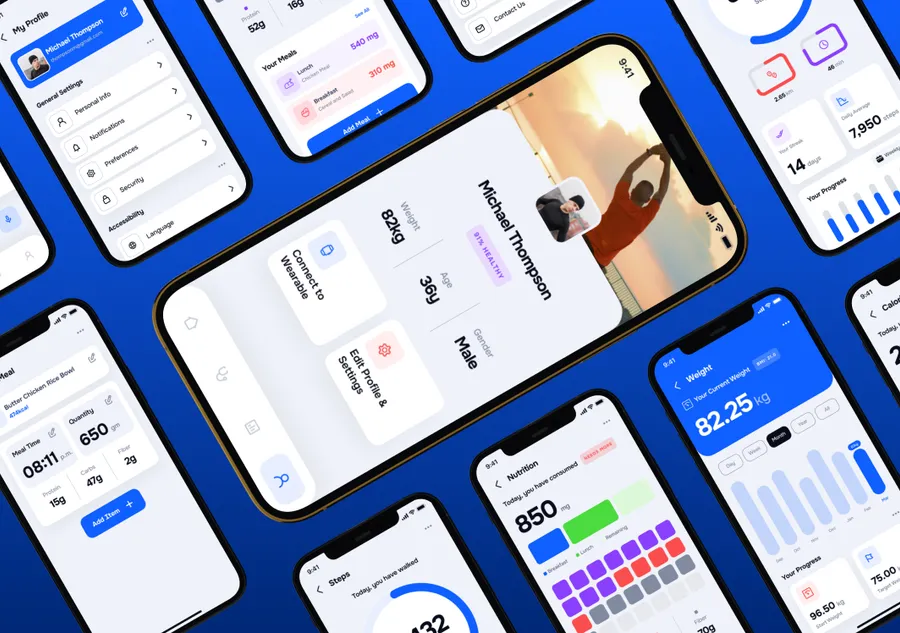
Proof: a React dashboard rebuilt on a shared design system
A European Series-B healthtech analytics scale-up had a dashboard that had grown unwieldy over four years of patching. We restructured the frontend around a shared design system. LCP fell from around 4.1 seconds to 1.6 seconds, component count dropped by about 55%, and the product team reported shipping new panels roughly three times faster. The client’s own Lighthouse runs back these figures, and the case marks them as directional. Details are in the React dashboard case study.