A dedicated mobile team fits when the app is a long-lived product: you ship updates every few weeks, support two operating systems and need people who know your release history. The team works only on your app, has its own lead and answers for delivery to your product owner. For a single cross-platform engineer inside a squad that already has a mobile lead, staff augmentation is simpler. The dedicated team overview compares the models.
React Native or native?
It sets the skills on the team, so we decide it with you in the first week.
- React Native fits most business apps: one codebase, shared logic with your web frontend and one release process for both stores. Our React Native development page covers what we build with it.
- Native Swift and Kotlin fit apps that lean hard on platform features, such as heavy camera or background processing, or products where the platform look is a feature.
- Mixed: many teams keep a native module for the one hard feature and everything else in React Native.
For the broader picture of the service, see mobile development. To hire single engineers, see mobile developers.
Who is on the team?
| Seat | What they own |
|---|---|
| Team lead (senior mobile engineer) | Architecture, release decisions, review, reporting to your product owner |
| Mobile engineers | Screens, navigation, offline behaviour, native modules, push notifications |
| Backend engineer, when the API is ours | Endpoints, authentication, versioning for old app builds |
| QA engineer | Device testing, regression suites, release candidates |
| Designer, part time | Platform conventions, accessibility, store assets |
How does the release process work?
Mobile differs from web because users do not update on your schedule. Old versions stay in the wild, so the API has to stay compatible with builds that are months old.
The team sets up a pipeline that builds every pull request, runs tests and produces an installable preview. A release candidate goes through a device checklist before submission: small and large screens, an older operating system version, poor connectivity and permission prompts denied. Store review times and rollout percentages are part of the plan, with a path to pause a staged rollout when crash reports rise.
The first month
The lead reads the codebase, the crash reports and the store reviews, then lists what hurts: slow cold start, crashes on one device family, a release that takes too long. In the first sprint everyone builds the app locally, the preview pipeline starts working and one real change reaches testers. After that the team takes the backlog plus one stability item per sprint.
How we work with your product owner
Your product owner orders the backlog and accepts work at each demo, usually on a real device. Our lead plans sprints, assigns tasks, reviews code and reports in writing. Store accounts, signing certificates and crash tools stay in your accounts, with the team given access, so you never depend on us to ship.
Engagement terms
The contract fixes the seats, the rate per seat, notice for changes, replacement and exit terms. The $50 to $150 per hour band applies to senior engineers in our stacks, and we quote after a short intro call, where we also agree overlap hours. The code belongs to you under an NDA and an IP assignment.
Proof: two native apps merged into one React Native codebase
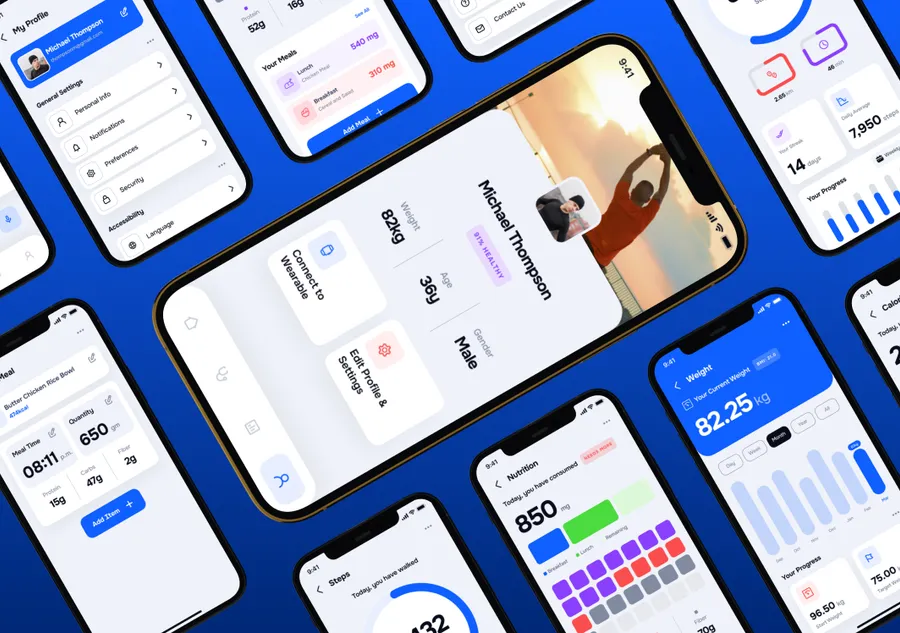
A European mid-market fitness brand at Series-C+ ran separate iOS and Android codebases with two teams, and releases stretched to six weeks. We consolidated both into a single React Native codebase with a shared component library. Release cycle time fell by about 60%, cold start dropped from 3.8s to 1.4s and feature throughput per sprint doubled. Read the React Native case study.